Ideas

How to Keep a Commonplace Book for Better Essay Ideas
There is a particular silence that arrives when you sit down to write and find you have nothing to hand. Not nothing to think — nothing to use. The line you admired last month, the remark overheard in a queue, the argument you half-worked out on a long walk: all of it has sunk somewhere out of reach. A commonplace book exists to stop that happening. It is not a diary and not quite a reading journal, though it borrows from both. It is a working store of quotations, observations and fragments, kept for one purpose above all: so that an essay can begin.
What a commonplace book is, and what it is not
The practice is old. Erasmus recommended it to students, and John Locke published a method for arranging one in the early eighteenth century. For a long stretch of European history it was simply what serious reading looked like: you read with a pen in your hand, and whatever struck you was copied out and filed under a heading.
Three distinctions are worth holding on to:
- A diary records your life in order. A commonplace book ignores chronology entirely.
- A reading journal keeps company with books. A commonplace book takes material from anywhere — books, conversations, the street, your own unfinished thinking.
- A scrapbook preserves things for their own sake. A commonplace book keeps things because they might be useful.
That last point matters more than it sounds. The book is a tool, not a monument. An entry that has never once been read again is doing nothing for you, however beautiful the handwriting.
Choose one container and stop deliberating
The format matters far less than people hope. A hardback notebook feels good and imposes an order you cannot rearrange. Index cards let you shuffle and regroup, which is genuinely useful when you are hunting for connections, but they are easy to scatter. A plain text file is searchable and travels everywhere, though it lacks the accidental encounters you get by flicking through pages.
Pick one of these, not four. The only test worth applying is speed: if adding an entry takes more than a minute or two, you will quietly stop doing it. Keep the book where you read, or the file pinned somewhere you will see daily. If you carry a notebook and also type notes on your phone, decide now which one is the real commonplace book and which is just a holding pen.
What to collect
Early on, collect too much rather than too little. You can always prune. In practice, useful entries tend to fall into a handful of types:
- Quotations that stopped you, copied exactly, with the source and page noted. Copying without a source is a trap you will resent later.
- Sentences you admire for their shape, not only their meaning — a piece of syntax you would like to try yourself.
- Overheard speech. The way a market trader counts change, the phrase a bus driver uses to move people along. Eavesdropping is legitimate research.
- Observations from ordinary days. How a queue reorganises itself when a second till opens. What a street sounds like at seven in the morning.
- Arguments you disagree with, stated fairly. Summarising an opposing view without sneering is difficult and excellent practice.
- Fragments that go nowhere yet. A paragraph that belongs to no project. A title with no essay attached.
- Questions you cannot answer. Why does nobody sit on the sunny side of the square? Keep the question; the answer may take years.
Leave out what you feel you ought to find interesting. A commonplace book filled with dutiful extracts from books you disliked will never tempt you back. Short entries beat long ones: two lines you reread are worth more than three pages you skip.
Add a line of your own to every entry
This is the habit that separates a working commonplace book from a graveyard of quotations. After you copy something, write one line of your own underneath. Not a summary — a reaction. Why did it catch you? What does it contradict? What does it remind you of? Where might it fit?
Three reliable ways to annotate
Why I kept this. A single sentence naming the pull. If you cannot name it, the entry is probably not yours.
Against this. A counter-argument, or a case where the quotation fails. This is the fastest route to an essay, because an essay is often just a disagreement worked out in public.
Where it could go. A note to a future self: maybe for the piece about inheritance, or use with the thing about maps. These small signposts are what make the book useful six months later.
Keep it findable
A commonplace book without any index becomes a diary again, and slowly fills up with material nobody can retrieve. The fix is modest. Reserve the last few pages for headings — attention, work, walking, cliché — and add page numbers as entries accumulate. In a digital file, use a handful of tags and resist inventing more; a tangle of twenty tags is the same as none.
Then build in one small act of rereading. Once a month, skim the last thirty entries with a pen and mark the three that still interest you. That is the whole system. It takes twenty minutes and it is where the value is created, because a fragment only becomes useful when it meets another fragment.
Turning fragments into essay ideas
Ideas rarely arrive whole. They arrive as collisions. Two entries you would never have put side by side can, read together, produce a subject you did not know you had.
Say you have copied a line about a city being loudest at night, and separately noted that your local high street now has more street lighting and fewer people on it. Neither entry is an essay. Put them next to each other and a question appears: what does a place look like when it is brightly lit and empty? That question will hold 1,500 words, and both entries are already the evidence.
Two further moves are worth trying when you are stuck. Look for tension between entries — anything that contradicts something else in the book is a candidate. And look for repetition: if three entries from different months circle the same idea, that idea is probably yours and worth writing properly.
Tie it to your writing week
Before you start a new piece, spend ten minutes in the commonplace book rather than staring at a blank page. Set out three or four candidate entries beside your working title and see which ones argue with it. You will usually find one that sharpens the opening, or supplies the example you were about to invent.
Then keep the loop closed. When a finished essay uses an entry, note the date beside it in the margin. Over a year you will see which parts of the book are productive and which are decoration — and you can aim your reading accordingly.
Begin with three entries this week
Choose the container today, not the perfect container. Write three entries over the next seven days, and write your own line under each one. That is enough to test the habit.
From there, the routine is small: copy what stops you, always name the source, always add a line of your own, and once a month sit down with a pen and find the collisions. Do that for a term and you will notice something pleasant. The silence at the start of an essay stops being empty, because the material has been gathering without you noticing — waiting, in your own handwriting, to be used.
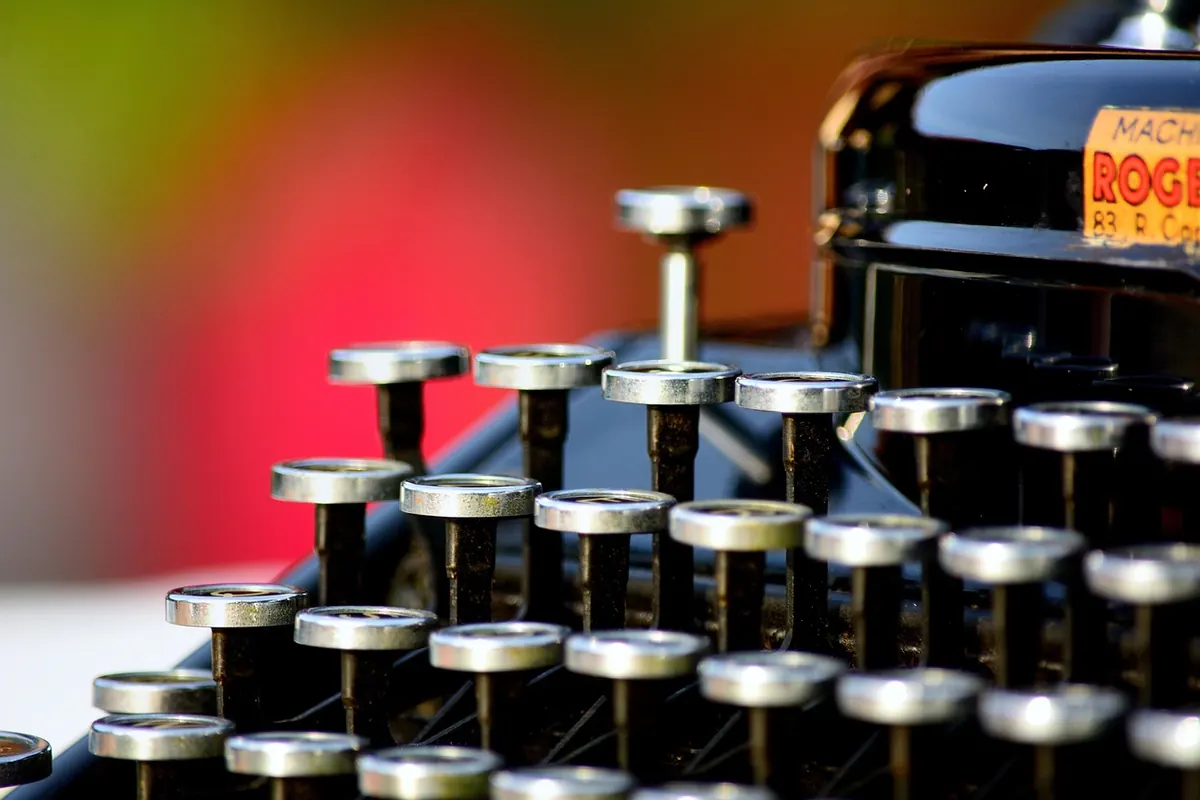
Photo: Negative Space / Pexels